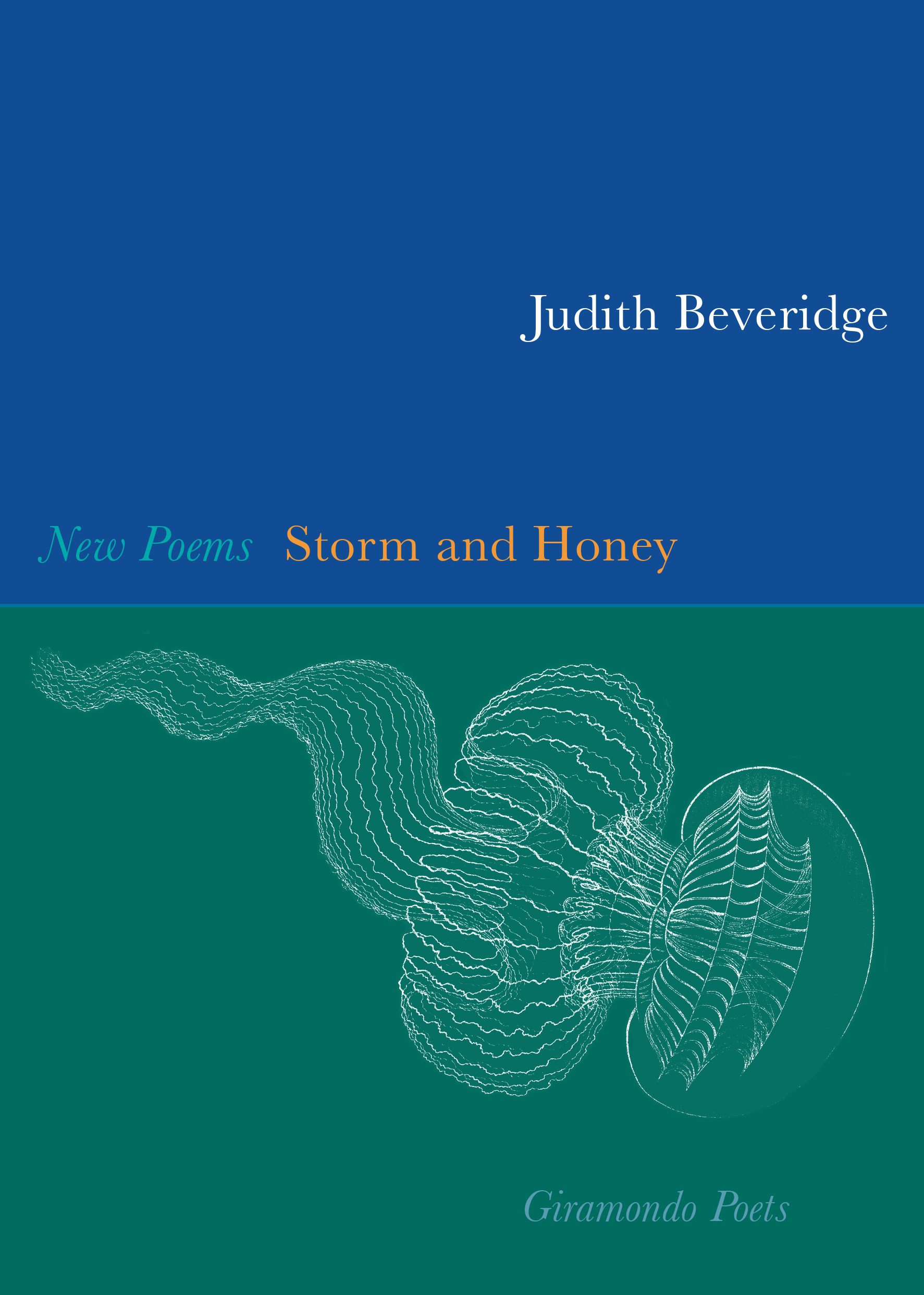
The major part of Storm and Honey by Judith Beveridge portrays the working life of a trawler’s crew, fishing in estuarine and coastal waters. It opens with the discovery of a child’s corpse inside the belly of a shark – an intensity which is held throughout as the poems respond to the visceral shock of the fishing, the characters of the men, and the power of light and wind and water.
These energies are so fully enacted in the language of the poems, in their visual and aural effects, that you feel there is a claim being made for poetry itself as an elemental power. Elsewhere there is delight and comedy too, in poetry’s ability to distil the storm.

WINNER: Grace Leven Poetry Prize 2010
SHORTLISTED: NSW Literary Awards – Kenneth Slessor Award for Poetry 2010
Storm and Honey is quite a book, full of remarkable pleasures and more than justifying its author’s status as one of Australia’s most important writers… [Beveridge] sets herself the challenge – as the upper echelons of poets do – of making each poem a unique and momentarily flashing structure – not unlike the forms that the sea throws up.
Australian Poetry Review
Admirers of Judith Beveridge’s work will be delighted… The motif/metaphor of fishing has been used effectively in the work of other major Australian poets… but Beveridge has taken it to a new level.
West Australian
Judith Beveridge is one of the most brilliant image-makers in Australian poetry… In Storm and Honey, Beveridge writes poems consciously in the light of other poems. She keeps always her own patient and fantastical style, but her poems here engage with other poems until poetry seems as much a term of existence as the landscape.
Lisa Gorton, Australian Book Review