
Andy Jackson
Andy Jackson wins Prime Minister’s Literary Award for Poetry with Human Looking
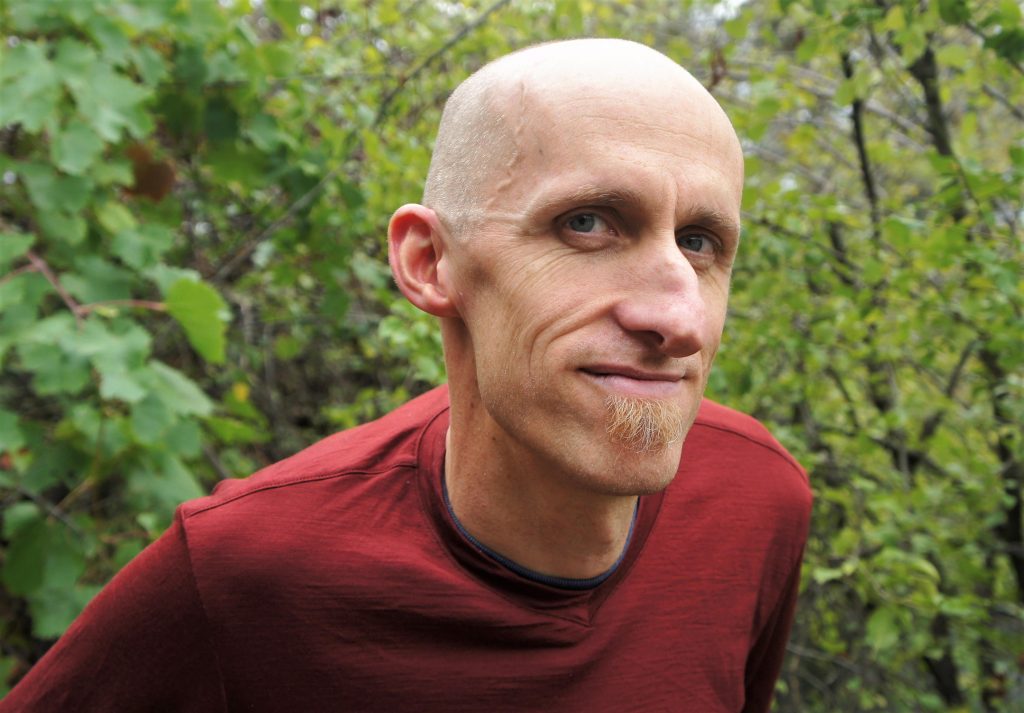
Andy Jackson has won the 2022 Prime Minister’s Literary Award for poetry for his collection, Human Looking. The announcement was made in December at a ceremony in Launceston, Tasmania.
The book, which gives a ground-breaking insight into the experience of disability from a distinguished poet lives with Marfan Syndrome, also won the ALS Gold Medal and was shortlisted for the Victorian Premier’s Literary Awards.
Read the judges’s comments below.
In Human Looking Jackson shows he has a highly distinctive poetic voice, and writes with great technical skill and variety. Starting with its ambiguous title, Jackson’s book is an extraordinary poetic exploration of his own disability – Marfan’s syndrome, which is disfiguring and distorts the shape of his face and body. His poems are blistering in their power, wonderfully subtle, objective and with no self-pity. The first poem in this book ‘Opening’ plunges straight in to the main subject, and deals with corrective surgery – the long incision, which his condition required. But Jackson does not stop with the physical incision. He confesses “the long suture ruptures/ in my head – the scar remaining open.” What happens to our bodies becomes our mind. Astonishingly he takes this yet one step further. Through his poem, Jackson tells us, you the reader “are becoming/ this unstitching, this sudden opening.” Jackson does not falsely valorise suffering – suffering is suffering – but it opens us. He is able to rise above it, feel love and empathy, and accept himself. In his poem ‘Borne away by distance’, referring to Mary Shelley’s ‘Frankenstein’, he writes of “I, this wonderful catastrophe . . . turning toward/ tremendous being.” Tremendous indeed. And beautiful.
— 2022 Prime Minister’s Literary Award judges
You can listen to Jackson talk about the book on The Garret Podcast and on the Poetry Unbound podcast.
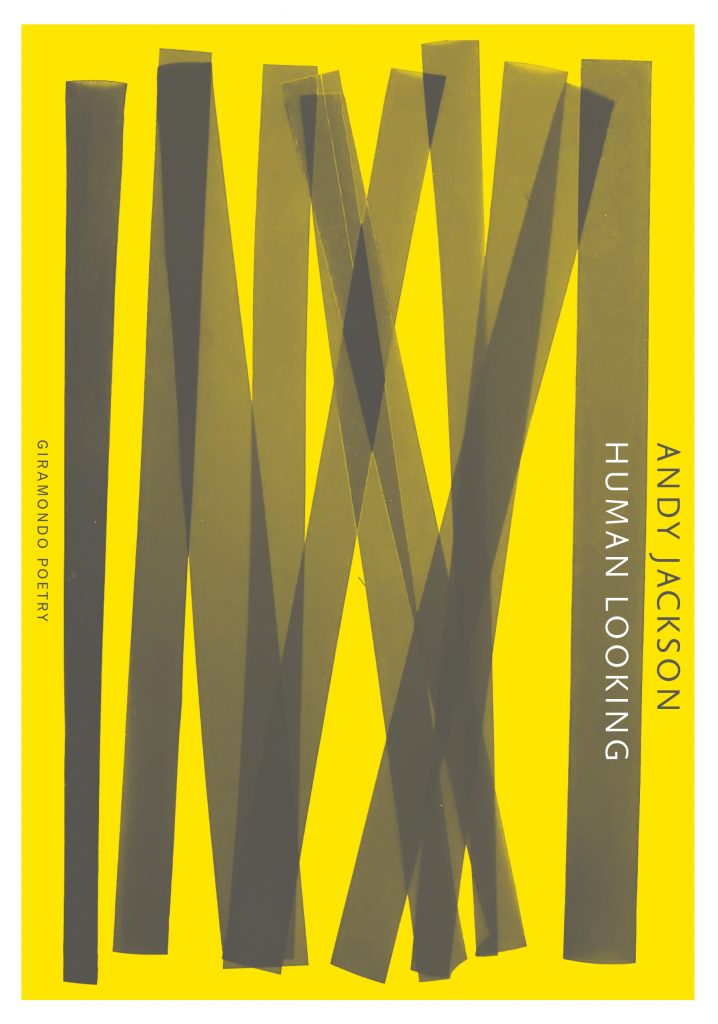
Andy Jackson wins 2022 ALS Gold Medal
Melbourne poet Andy Jackson has won the 2022 Australian Literature Society (ALS) Gold Medal for Human Looking, a visceral yet compassionate collection which speaks on the diverse experiences of disability, and gives a voice to those often treated as ‘Other’. The prize is Australia’s longest-running literary award, and recognises the best contribution to literature in Australia in the preceding calendar year.
In their citation, the award judges described Human Looking as a ‘sharp and brilliant collection…with powerful poetic skill and infinite compassion, this book illuminates the world differently and gives us a new way to see.’
Jackson, who lives with the rare genetic disorder Marfan Syndrome, used the announcement as an opportunity call for the government to fix the NDIS.
‘When I first started writing poetry I wasn’t aware of a single poet who wrote openly about disability,’ he said. ‘I try to write poems that stare back… in shapes and forms that are themselves disformed.’
Read the judges’ citation in full below.
The poems in this sharp and brilliant collection pay sustained and loving attention to the human form. Opening out of disabled/disfigured experience, they reckon with the history and iconography of deformity: using medical documents, news reports, trial transcripts, literary texts and visual artworks, Jackson inhabits, transforms, and speaks back to a deeply rooted way of looking that casts the disabled or disfigured body as deficient, repulsive, or the object of prurient fascination. His poems provide a more capacious account of the aesthetics and experience of the human body, displacing the ‘normal’ body from the centre of our attention and expanding the possibilities for human looking. Measured and dispassionate in tone, the poems nonetheless burst with anger and joy.
Each poem has exceptional merit individually, but they are also carefully sequenced, and their cumulative effect is considerable. The sequence opens with the deceptive simplicity of an apparently autobiographical lyric ‘I’ in the first poem, which describes a body altered by surgical intervention. Next, the reader is moved through a series of poems that contextualise the speaker’s experience, relating it to mainstream discourses about disability; the ongoing history of violence against disabled people; and the voices of other disabled, disfigured or deformed figures from art, myth, and history, including Frankenstein’s monster and Sisyphus. In the final, enormously affirmative poem of the sequence, we return to an autobiographical ‘I’ with new eyes, and inhabit the speaker’s universal body: like all human bodies it is vulnerable, imperfect, and in need of care. Our interdependent bodies are the basis of our connection to one another, to our loved ones, and to the more-than-human world.
With powerful poetic skill and infinite compassion, this book illuminates the world differently and gives us a new way to see.
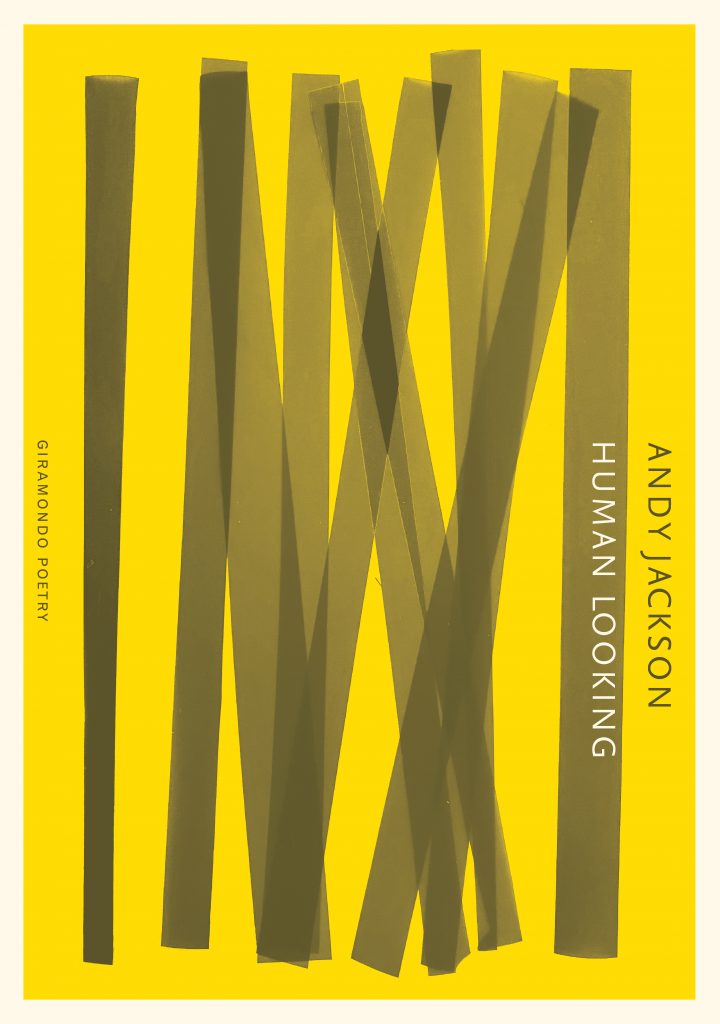
Human Looking was also shortlisted for the Victorian Premier’s Literary Award 2022. Order the book here.