
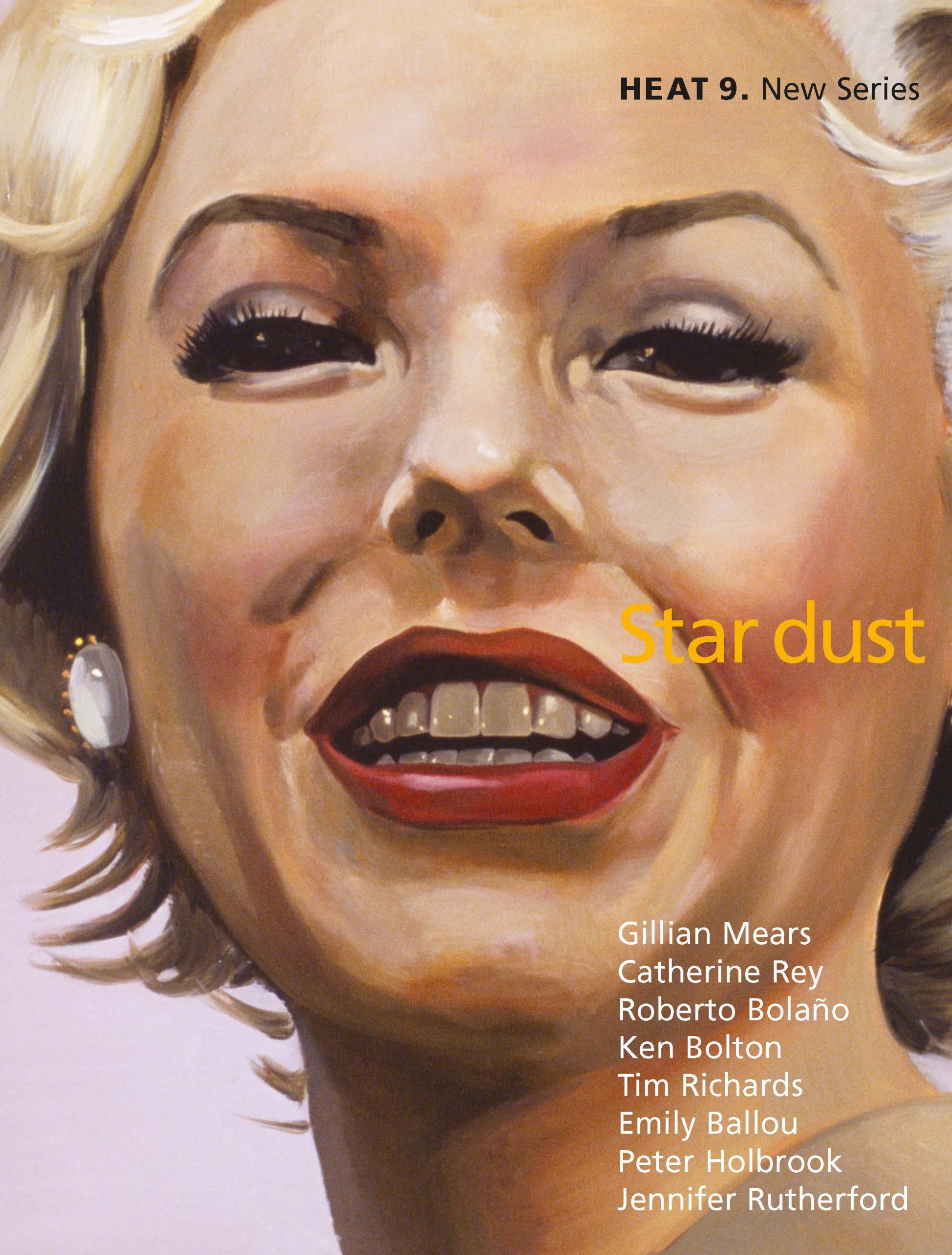
Published May 2005
Become a subscriber
How Do Salamanders Die?
Translated from the French by Andrew Riemer
I had two mothers.
Many of those who have trouble getting through a family Christmas would think that one is far too many. But I certainly had two mothers, a phenomenon we encounter more and more frequently these days thanks to advances made in genetics. I recently read the text of a conversation between Jacques Derrida and Elisabeth Roudinesco in which the philosopher enthusiastically envisages a new model of parenthood. Family configurations in the future will perhaps see families with three mothers: ‘The first donates her ovocytes, the second carries and gives birth to the child, the third adopts it and brings it up. So it is possible to distinguish between the genetic mother, the mother that carries the child (or a surrogate mother) and a mother we may call the social mother. Legislation concerning filiation differs from country to country. In France, the social mother is the legal mother.’1 Ready to embrace every kind of future and all possibilities, Derrida the enthusiast enthuses about the new model for the family which will deconstruct, for our own good perhaps, the old structure. Why not? I am a living example of this type of experimentation, even if in 1956 people did not think about the kind of things that call science fiction to mind. I can assure you that in the head of a child who had undergone such an experience, things are much more confused and painful than they would seem to be. In a curious way, the complexity of my origin has been reflected in the recurring structures of my work, and it is this aspect of the question that I would like to consider here.
The time I spent with my mother, my genetic mother, was very short: I was three weeks old when she entrusted me, gave me, lent me – which of these three it is impossible to know – to my paternal grandparents. She constructed a family legend around this gift of a child, the drift of which I could never follow. I believe that, quite simply, having given birth to three sons, my mother did not want to have a daughter and that even though we were living in a developed Western society, she reacted the way that allegedly primitive tribes, for whom the arrival of a baby girl is seen as a curse, would have reacted. I recall one of the first texts I wrote, ‘Comment meurent les salamandres?’ (‘How Do Salamanders Die?’) an unpublished story, in which a newborn child, a girl, is abandoned on a stone slab outside the family dwelling, where certain death awaits her. Girls in my texts usually end up badly. Three weeks after I was born, my mother placed me with her husband’s parents. Their boundless love saved me. Yes, it saved me, on the one hand, from my mother’s fury: she was a creature of excesses, a monomaniac, a neurotic, who did not know how to deal with children. It saved me, in the same fashion, from my father, a weak man, a depressive, who bent his back and bowed before the terrifying woman he had married. Bouts of violence sometimes led him to certain deplorable excesses against this Medea, which he never saw through to their culmination, for he had allowed his weakness – or his lethargy – to grow like an obscene tumour that must have filled him with shame in his rare moments of lucidity. Fortunately, I lived far from them, I knew that they were my parents, but I had no particular feeling for them. I should stress here that I lived with my grandparents and that I went once a week, on Sundays, to have lunch with my parents. My grandparents always went with me. Each of our visits lasted only a short time. My grandparents were sensible and generous people. They had lived in Western Australia, where my father was born, they always had a fund of stories to tell me about their past, they encouraged my creativity: I painted and I played the piano quite well (I wanted to become a concert pianist). As good pioneers of the second wave of emigration – they arrived in WA in 1913 – they had to learn how to do everything for themselves, and they passed on to me those skills of an earlier age.
I do not know what problems would arise from having three mothers – three gorgons – and what mental confusions it would provoke in a child, but I know that two mothers were more than enough to make life difficult for me. I soon felt that I was a lump of flesh over which the two women were quarrelling. My grandmother, who lost a very young daughter in 1912 and had two sons afterwards, saw my arrival as a blessing. She adored me and I adored her. Her death was certainly the most cruel moment of my existence. My mother watched how my love for my grandmother grew, absorbing me to the point of developing into a passion. That made her suffer. She tried every means of alienating me from my beloved grandmother: slander, mockery, bouts of jealousy. For her part, my grandmother, afraid that in a fit of insane jealousy my mother would want to take me back, acted in the same manner. Taking me back: that threat hovered over my childhood. It soon became an intolerable situation for me, torn between the rival claims of two women who loathed each other and forced themselves to feign a strained politeness when they were in one another’s company. These disputes can be explained by the fact that my grandmother worshipped her son, my father, and defended him tooth and nail against his wife’s onslaughts. My very first texts deal with this prize possession, a child tossed back and forth like a ball, a piece of cloth the two women snatch from one another. Wanting to flee this intolerable conflict, I gathered up my bits and pieces and left, at the age of seventeen, to live my life. Straight away I began to write.
It took me a good many years to forget (could I have merely forgotten it?) that I had been abandoned, and for a long time my life revolved around this injury. My mother was like a void. A hollow being. An apparition. At times I would have preferred her dead rather than to be obliged to have anything to do with her. What my grandmother had planted in me, she seemed to want to destroy for the sheer pleasure of it. She adored my three brothers, all three older than me. We never made peace, she and I. We never found neutral territory. I thought that her death would put an end to our struggle, but, strangely, it did not come to an end when she died. For a long time after her disappearance, she returned to haunt me, to burden my dreams, let’s say rather my nightmares, which howled with our rage, our quarrels, with settling scores. It was only after I assassinated her definitively in 2002 in Ce que racontait Jones that the situation returned to normal and my nights grew calm once more. Women have an Oedipus too, I can assure you. Unless we have killed off our mothers – literature is the most effective way – it is impossible for us to go forward.
Curiously, if I look at my work I can see that there is a single common structure that reveals itself in almost every text. Someone is at the centre of a conflict, a young person over whom two adults quarrel. Lucy, for example, in Lucy comme les chiens is at the centre of a sordid transaction: her mother sells her to an elderly man. The chapters alternate between the old man’s house and the mother’s. The mother takes her back, then the old man takes her back, and so it goes on. In Ce que racontait Jones Trinité is brought up by her grandmother: Magnolita Rosaria. Trinité had been taken, when she was a baby, from her young mother, Mary, who was left to starve to death. In Éloge de l’oubli, an autobiographical text, there lurks, behind my grandmother who occupies all of the space, the figure of my mother: she is the great absence. I can hear their shouts, their quarrels about taking me back, quarrels from which I was excluded, though I listened to their echoes from my room. In Les Revenantes, the novel I am working on now, Elisabeth, the central character, is torn between a ghost that has taken possession of her, a double of her own self in a way, and the older man she has married out of self-interest. Shirley, her daughter, has been stolen from her by her husband out of sheer sadism, and so on…I will not go any further with this simplistic analysis.
Considering my childhood, it is possible to think of the opposing forces struggling in my imagination to capture the creature at stake there as those of good and evil, since, to simplify radically, there was in my life a good mother and a bad. And yet, in my universe, the two forces which strive against one another are equally harmful. For even if the two mother-figures who dominated my childhood had wanted the best for me, in their very peculiar ways, they destroyed me without being aware of it. When the two women were together, it was all brimstone and suffering for the child that I was then. They attacked each other, but never directly, for they kept up a show of politeness. Ambiguous words, a false tone of voice, ceremonial cordiality made up their mode of communication. When I was dealing with them individually, I was obliged to back one or the other. They forced me to take sides, and that proved, to put it simply, hellish. It reminds me of those divorced parents who torture their kids by constantly asking them: Tell me, who do you like more, daddy or mummy? There were some particularly trying times of the year for me, Mother’s Day for example. It goes without saying that I had to make two drawings, two presents etc… At school the other children spent the whole week getting just one of these ready. So I had to make, in some haste, another card, for my second mother. One year I was running short of time, so in my drawing I had to transform the word maman into mamie. A clumsy expedient that upset my grandmother. Her distress hurt me. That I hadn’t spent enough time on her made me feel bad. I was caught in an infernal trap, this emotional blackmail darkened the days of my childhood. I decided to put it all behind me when I was seventeen, confused and directionless. Without telling anyone, I left Bordeaux where I was studying and went abroad. I stayed away from my family, no one knew where I had fled. My mother thought it advisable to send the police after me. Seeing that nothing would quell my mother’s venom, because the conflict between my mother and me went on beyond my grandmother’s death, as if the poor woman’s death continued to come between us, I eventually left France in 1997, reckoning that putting half a world between myself and my mother would at last let me live in peace. Nothing could have satisfied the hunger of that woman, not even the death of her enemy. Everything that I was – my coldness towards her, my attitude to her, which had nothing of a daughter about it, my cutting words, what I wrote – hurt her, for I was a constant reminder of her frustration. I nevertheless wanted to dedicate Les Revenantes to my mother: it seemed to me that she had sent me a sign from the beyond. It was time to bury the hatchet. She has been dead for five years and the dead sometimes insist on their legitimate right to rest in peace too. Finding the middle way has taken me forty-eight years. I am hard put to imagine how many years of labour it would have taken if the monster-mother had three heads!…
—
When we engaged in erudite stylistic analyses at university, we sometimes put the following question to our teachers: when writers write, are they thinking of all that mishmash of metaphors, figures of style, themes, lexical fields, assonances, alliteration and whatever else…? For it must be a peculiar kind of brain that can bring together all those details at one and the same time…? Our teachers looked at us, worried, but did not know how to reply. Well, I now have the answer to that naïve question: no, writers do not think. They write, that’s all. Have I ever thought in terms of the three-fold structure I am telling you about here? No. I am thinking about it, to tell the truth, in this rational manner for the first time today. Kundera doesn’t speak about themes in his work, but about existential themes. I will speak neither of themes nor existential themes, but of interior modality. The word ‘theme’ harks back to the imagined and invented, to something located outside the artist’s mental universe. Now writers work on themselves, on their own souls, it is with their own flesh that they feed their books. This interior modality constitutes a starting point, like a centre around which artists revolve, from which they distance themselves, to which they return, a core that shapes them. I am thinking here of Kafka. The sad relationship with a tyrannical father was the focus of his thoughts, it gave birth as much to ‘Metamorphosis’ as to The Trial. Working on one’s own flesh is not at all restful, for each new text opens up old wounds. And it is not a matter of masochism, contrary to what one might think. These days, a curious problem runs through the question of autobiography – let us say autofiction. Many contemporary fictional texts are autofictional. And critics tie themselves in knots trying to work out where the dividing line between novel and autobiography might lie. They will have to understand eventually that all novels are autobiographies and all autobiographies are novels. Though the critic asks the question, the writer never asks that question while engaged in the act of writing. That is, without a doubt, why writers get upset and tetchy when they are asked: is this a novel or an autobiography? Digging around in one’s own flesh and in terms of one’s interior modality is by definition to be writing out of one’s own self. It is therefore necessary for writers – a question of courage, of engagement, of authenticity, of faith – to go a greater or lesser distance in search of each individual writer’s truth, that singular fact which is at the heart of the writer’s struggle with the world, and it is certainly along that scale that the difference between autobiography and novel is to be found. Into what else could one delve but one’s own flesh? It is still what one knows best.
Now, there is in truth a much more painful source of misunderstanding for the writer, one critics never take into account. It is when the text – autobiographical and rooted in the artist’s flesh, as all true literary texts are – is discussed as if it were external to its author, that is to say as purely fictional, invented, imagined, separated from the person who wrote it when it was born out of an internal experience and a real enough suffering. Poe’s Tales of Mystery and Imagination is one example. If we read the marginalia we realise to what extent Poe provided the material for his own work. The level at which the text is read, comprehended or understood by readers – autobiography, fictional autobiography or novel – is in fact a measure of the scale according to which literary criticism – and more broadly literary opinion – digests and regurgitates the moral, social and sexual orders of the society it reflects and for which it acts as a safety rail. How many must have said to themselves: this monstrous story couldn’t have come to the writer all by itself. No, not by itself. It has been all made up. How would we classify Mishima’s The Golden Pavilion? Would we put Elfriede Jelinek’s The Piano Teacher into an autobiographical category? Would we put Michel Houellebecq’s Atomised into the category of a novel? Should we think that Dostoyevsky had the overt intention of killing an old woman who had lent him money and, one fine day, asked for it to be repaid?
I’d like to make a digression here about the that latest rentrée littéraire in France. Many novels that came out in the [northern] autumn of 2004 were dubbed ‘Houellebecqian’. One found there the same heroes exhausted by the end of a century spent in thrall to the dictates of liberalism and the lame sexuality of pointless seductions. So it seems that Michel Houellebecq had established a school, according to critics, and many male French writers aged between forty and fifty write as he does, without failing to belittle their obvious inspiration. They imitate, plagiarise, but never render unto Caesar what is Caesar’s. Criticism, happily, reminds us that there is only one Michel Houellebecq. And I can assure you there is only one Michel Houellebecq. He is the exhausted hero, he is the man who has been flayed alive, he is the sole writer who knew how to depict, with the irony of despair, the end of a century where the market economy dictates the law and where everything has become merchandise, thought as much as sex. Michel Houellebecq is what he writes about, as all great writers write about themselves. He digs deep into his own flesh. The plagiarists never possess his grace. All this is just to put the question to you once more: how to classify Atomised? How to classify Platform? Novel or autobiography? And how to classify the dozens of rip-offs and makeovers of Atomised? As novel or counterfeit?
I would suggest another definition of the word novel: it is the veil of propriety masking the critic’s shocked prudishness – or the reader’s. Whatever seems plausible, realistic enough to have been experienced, and more or less corresponds to the image we have fashioned of the author is considered to be autobiographical. Whatever exceeds the bounds of propriety and does not conform at all with the largely sympathetic aspect of the author we have been shown in the papers or on television is considered fictional. I conclude once more, in sadness – and I have come to this conclusion since I left the academy – that a certain kind of academic criticism and thought has trouble apprehending what goes on in an author’s mind, and that this runs, three times out of four, against the grain of the reality of writing. I do not criticise the university as a whole: I am myself its product. But I’d like to point the finger at that vast crushing mechanism, its blades more terrible than hatchets: structuralism, postmodernism, deconstruction etc.…blades capable of digesting texts too hastily read, too quickly consumed, too quickly classified, too quickly forgotten.2 Texts composed of flesh and blood which one slashes into and regurgitates in the form of articles intended to mount a campaign for a career. Never forget that something dangerous lurks behind the finest texts. I have a particular fondness for Michel Leiris. I love his preface to L’Age d’homme. It has helped me live and write. ‘What goes on in the field of literature,’ he says, ‘is it not bereft of value if it remains “aesthetic”, anodyne, free of sanctions, if there is nothing in the act of writing a work which would be the equivalent’ – and here comes one of the writer’s favourite images – ‘of what is for the torero the bull’s steely horn, which alone – by virtue of the physical menace it harbours – confers a human reality on his art, and prevents it from becoming something other than the futile grace of a ballerina?’ L’Age d’homme, an autobiographical text, was certainly a feat of bravado in 1939, for at that time it required courage to acknowledge one’s homosexuality in public. Every text fit to be called literature takes risks and places the writer in danger. A text that does not flirt with danger belongs to entertainment, not to literature.
No, writers do not think. You are surely disappointed, and you will raise the objection that they are capable of writing Milan Kundera’s Testaments Betrayed, Nathalie Sarrault’s The Age of Suspicion and Virginia Woolf’s A Room of One’s Own. And yet, it’s in their novels all the same and in the final count that novelists excel. If I have any advice to give to a beginner it is this: do not think too much. That makes for bad novels. By the same token, you must read, read extensively, read other authors, be curious about their work and respect it (behind the finest texts there is real suffering), the classics as much the moderns, from Marcus Aurelius to Michel Houellebecq, from Erasmus to Elfriede Jelinek, and write, write a great deal, scribble and scribble some more, and throw away much of it too, in order to give birth to the marvel of a hitherto unknown thought that surges out of its own self thanks to that unique act, for thought is neither external to nor anterior to the text, but consubstantial with the act of writing. Writers do not think, they allow themselves to be borne along.
- Jacques Derrida, Elisabeth Roudinesco, De quoi demain, Dialogue (Paris, Fayard 2001), p.70.
- The only one who knew how to deconstruct intelligently was the recently deceased Jacques Derrida. His work is first-rate.

